Whole metagenome analysis with MOSHPIT
Welcome! 👋 MOSHPIT (MOdular SHotgun metagenome Pipelines with Integrated provenance Tracking) is a toolkit of plugins for whole metagenome assembly, annotation, and analysis built on the microbiome multi-omics data science framework QIIME 2. MOSHPIT enables flexible, modular, fully reproducible workflows for read-based or assembly-based analysis of metagenome data.
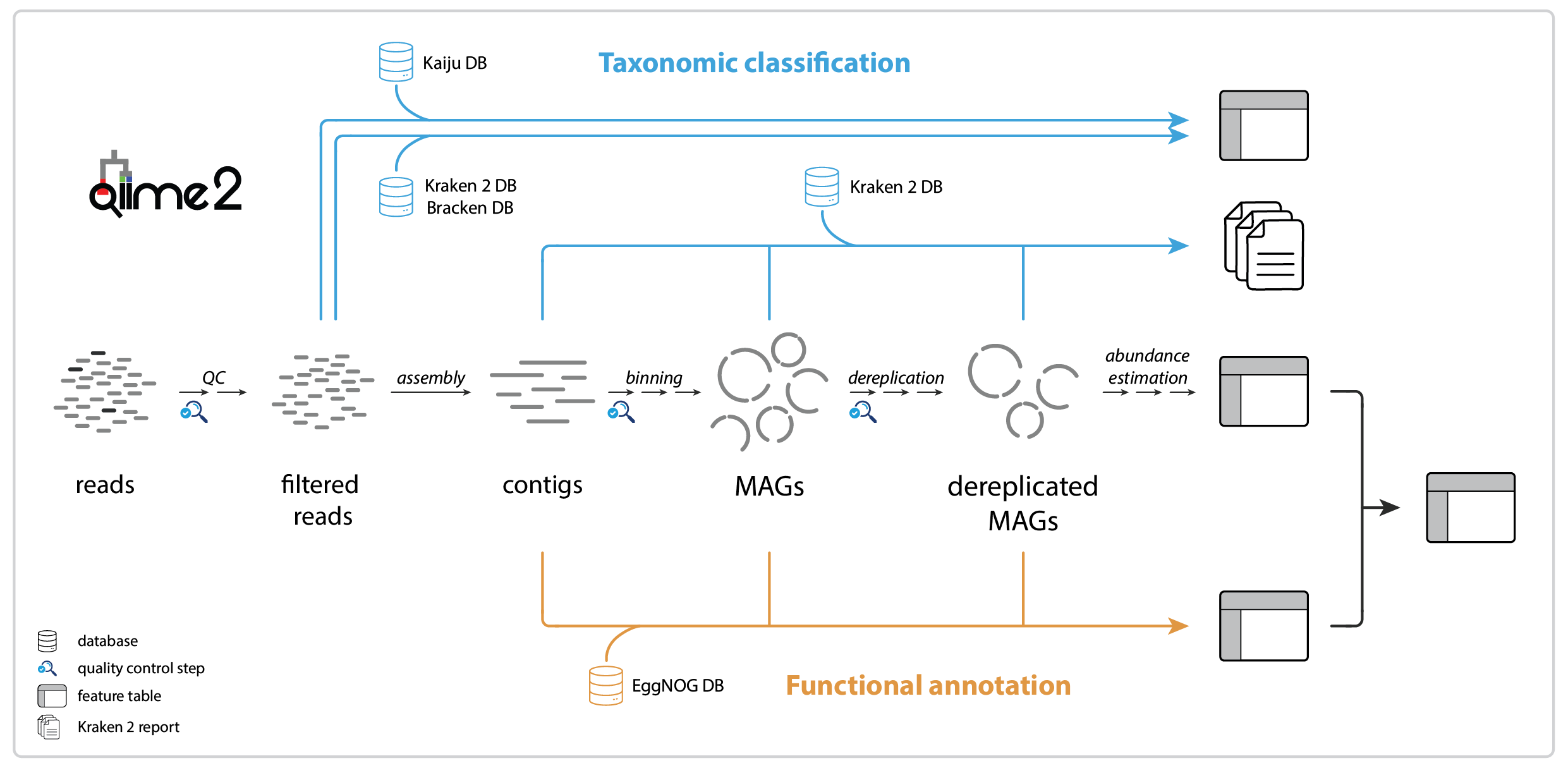
Figure 1:Schematic of current analysis workflows available in MOSHPIT.
The following main plugins comprise the core of the MOSHPIT toolkit and are included in the MOSHPIT distribution:
q2-assembly
This plugin contains actions for (meta)genome assembly and quality control, genome indexing and read mapping.
q2-mag
This plugin provides actions for contig binning, MAG quality control, dereplication, and abundance estimation.
q2-annotate
This plugin provides actions for taxonomic and functional annotation of contigs and MAGs, human host removal.
q2-fastp
This plugin provides actions for quality control using fastp.
q2-sourmash
This plugin provides actions for computing and comparing MinHash signatures using sourmash.
q2-fondue
This plugin provides actions for data retrieval from SRA.
Getting started
Not sure where to begin? The How-to Guides section is organized into two sub-groups:
Analysis recipes — goal-oriented recipes for each analytical step:
How to assemble contigs — assemble reads with MEGAHIT or SPAdes and evaluate assembly quality
How to bin MAGs — index, map, bin, and quality-filter metagenome-assembled genomes
Quality control at every step — read filtering, host removal, assembly QC, and MAG quality
Early taxonomic composition — get a community overview from reads, contigs, or MAGs
Dereplicate MAGs and estimate abundance — cluster redundant MAGs across samples and compute RPKM/TPM
Profile functional potential — read-based (HUMAnN 3) and MAG-based (EggNOG) functional annotation
Using MOSHPIT — setting up and operating the toolkit: install MOSHPIT, configure parsl parallelization, use the artifact cache, fetch data from SRA, import and export artifacts.
The full Tutorials walk through complete analyses on real and simulated datasets: the End-to-end MAG reconstruction tutorial is the best starting point if you are new to MOSHPIT.
You may also want to check out these other QIIME 2 plugins for antimicrobial resistance gene (ARG) detection and viromics applications. These plugins are not covered in this tutorial. They have their own installation instructions and tutorials (see the wiki page on the respective GitHub repositories). You can use these plugins with some of the artifacts produced by q2-assembly, q2-mag, and q2-annotate:
q2-rgi
q2-amrfinderplus
ARG detection using the AMRFinderPlus tool.
q2-viromics
Detection of viral sequences and their quality control.
Finally, here are some other plugins we developed and that are compatible with metagenomic workflows:
q2-skani
ANI analysis using skani.
q2-gunc
Chimerism and contamination detection in prokaryotic genomes with gunc.
q2-subread
Read alignment and quantification using Subread.
q2-deseq2
Differential expression analysis using DESeq2.
q2-checkm
Assessment of microbial genome quality with CheckM v1.
q2-humann3
Read-based functional profiling with HUMAnN 3.
- Beghini, F., McIver, L. J., Blanco-Míguez, A., Dubois, L., Asnicar, F., Maharjan, S., Mailyan, A., Manghi, P., Scholz, M., Thomas, A. M., Valles-Colomer, M., Weingart, G., Zhang, Y., Zolfo, M., Huttenhower, C., Franzosa, E. A., & Segata, N. (2021). Integrating taxonomic, functional, and strain-level profiling of diverse microbial communities with bioBakery 3. eLife, 10, e65088. 10.7554/eLife.65088